Free Electrical Training Course – Learn Wiring Skills and Get Certificate
Learn wiring skills and earn a certificate through a free electrical training course.
Electrical skills can be used in homes, offices, shops, factories, construction sites, and many other workplaces. Those who want to learn wiring, electrical safety, circuits, tools, and maintenance can begin learning these skills online.
A Free Electrical Training Course can be beneficial for students, job seekers, beginners, technicians, and anyone interested in gaining technical knowledge. Some online courses allow students to learn from the comfort of their homes using a mobile phone, laptop, or computer. Some platforms also provide a certificate after successful completion of the course.
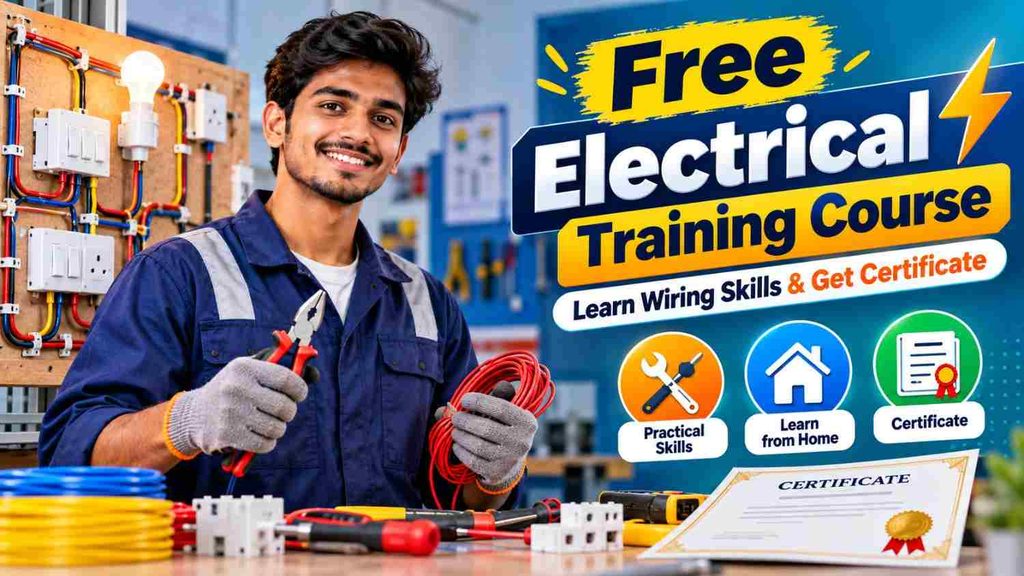
The main benefit of online electrical training is flexibility. Students can learn at their own pace, review difficult lessons, and understand fundamental electrical principles before moving on to practical training.
What Is a Free Electrical Training Course?
A free electrical training course is an online learning programme that provides basic electrical concepts and wiring skills without requiring students to attend regular classes.
Depending on the course, students may be introduced to the following topics:
- Electrical safety
- Basic wiring
- Electrical circuits
- Voltage and current
- Switches and sockets
- Electrical tools
- Testing devices
- House wiring concepts
- Circuit protection
- Fault identification
- Electrical maintenance
Some courses do not charge any fees, while others offer free learning but may charge separately for a certificate.
Free Electrical Training Course – Quick Overview
| Course Feature | Details |
|---|---|
| Course Type | Online Electrical Training |
| Learning Mode | Mobile, Laptop, or Computer |
| Suitable For | Beginners, Students, and Job Seekers |
| Course Fees | Free or Freemium |
| Certificate | Available on selected platforms |
| Main Topics | Wiring, Safety, Circuits, Tools, and Testing |
| Learning Level | Beginner to Intermediate |
| Study Schedule | Flexible |
| Practical Training | May require separate hands-on experience |
| Career Use | Skill development and job preparation |
What Can You Learn in an Electrical Training Course?
The syllabus may differ from one training platform to another. However, most beginner-level electrical courses cover several common topics.
1. Basic Electrical Concepts
Students should have some basic knowledge of electrical science before starting to learn wiring.
Courses may cover:
- Voltage
- Current
- Resistance
- Electrical power
- AC current
- DC current
- Series circuits
- Parallel circuits
These concepts help students understand the flow of electricity and how different electrical systems function.
2. Electrical Wiring Skills
Wiring is a fundamental part of electrical training.
Learners may study:
- Basic wire connections
- Switch wiring
- Socket wiring
- Lighting circuits
- Cable identification
- Circuit connections
- Distribution board basics
- Earthing concepts
Online demonstrations can help beginners understand how wiring systems are arranged. However, practical wiring should be learned through proper hands-on training.
3. Electrical Safety Rules
Electrical safety is essential for anyone who works with electricity.
Training courses may cover:
- Electric shock prevention
- Safe isolation
- Protective equipment
- Circuit breakers
- Fuse protection
- Safe use of tools
- Earthing
- Emergency precautions
Electricity can cause serious injury, fire, or damage if handled incorrectly. Anyone performing practical electrical work should receive appropriate safety training.
4. Electrical Tools and Equipment
Electricians use different tools for installation, repair, and maintenance.
Tools that may be introduced in a basic course include:
- Screwdrivers
- Pliers
- Wire cutters
- Wire strippers
- Multimeters
- Voltage testers
- Measuring tools
- Insulated hand tools
Learners can understand the purpose of each tool and the basic rules for using it safely.
5. Electrical Testing
Electrical testing is an important part of electrical work because it helps detect faults and determine whether a circuit is working correctly.
Beginner training may explain:
- Voltage testing
- Continuity testing
- Basic multimeter use
- Fault checking
- Circuit inspection
- Connection testing
Advanced testing should not be attempted without practical training and supervised practice.
Benefits of Joining a Free Electrical Training Course
There are several benefits to enrolling in a free electrical training course.
Learn From Home
Students can learn from home without having to travel to a training centre every day.
Flexible Study Schedule
Many online courses allow students to learn at their own pace.
Low-Cost Learning
Free courses can reduce the cost of learning basic electrical concepts.
Repeat Lessons
Videos and digital lessons can be replayed multiple times.
Improve Technical Skills
Electrical training can help students develop knowledge and skills related to wiring, circuits, tools, and maintenance.
Career Preparation
Basic electrical knowledge can be useful for those planning to pursue technical or maintenance-related careers.
Who Can Join a Free Electrical Training Course?
Depending on the training provider, courses may be suitable for:
- School students
- 10th pass candidates
- 12th pass candidates
- ITI aspirants
- Job seekers
- Electrician helpers
- Maintenance workers
- Technicians
- Beginners interested in electrical work
Further qualifications or work experience may be required for advanced programmes.
How to Join a Free Electrical Training Course Online
The registration process may differ across platforms, but it is generally simple.
Step 1: Choose a Training Platform
Choose a trusted learning platform that provides electrical or wiring-related courses.
Step 2: Review the Course Syllabus
Review the topics included in the course.
Make sure it includes the skills you are interested in.
Step 3: Review the Course Fee
Confirm whether the course is completely free or whether certain features require payment.
Step 4: Check the Certificate Conditions
Check whether the certificate is:
- Free
- Paid
- Optional
- Downloadable
- Verified
Step 5: Create an Account
Most platforms require registration using an email address or mobile number.
Step 6: Complete the Lessons
Watch the videos, read the learning materials, view demonstrations, and complete the modules included in the course.
Step 7: Complete the Assessment
Some courses may require quizzes or final exams.
Step 8: Get the Certificate
If the course offers certification and you meet the completion requirements, you may be able to obtain the certificate from your account.
Is the Electrical Training Certificate Free?
Not always.
Some platforms provide:
Free Course + Free Certificate
Both the training and certificate are free.
Other platforms provide:
Free Course + Paid Certificate
The training is free, but learners may need to pay for a verified or downloadable certificate.
Certain platforms may also require a subscription.
Always check the conditions for both the course and certificate before registering.
Online Electrical Training vs Practical Training
| Online Electrical Training | Practical Electrical Training |
|---|---|
| Study from home | Study at a workshop or institute |
| Flexible schedule | Structured schedule |
| Mostly theory-based | Mostly hands-on |
| Usually free or low-cost | May require training fees |
| Video demonstrations | Real tools and equipment |
| Helpful for beginners | Useful for practical experience |
Learners can understand theory through online training and develop hands-on skills through practical training.
Career Opportunities After Electrical Training
Electrical skills have applications across many industries.
After gaining the right training, experience, and qualifications where required, learners may explore careers such as:
- Electrician Helper
- Domestic Electrician
- Wiring Technician
- Electrical Technician
- Maintenance Technician
- Building Maintenance Worker
- Industrial Electrical Assistant
- Solar Installation Assistant
- Electrical Service Technician
Job opportunities can vary depending on skill level, qualifications, practical experience, location, and employer requirements.
Can a Free Electrical Course Help You Get a Job?
A free electrical course can help improve your knowledge and show that you have completed training. However, having a certificate does not guarantee employment.
Employers may also consider:
- Practical experience
- Technical knowledge
- ITI qualification
- Apprenticeship training
- Electrical safety knowledge
- Work experience
- Recognised certification
- Local licence requirements
Practical training is very important in electrical work.
Important Things to Check Before Joining
Before selecting an online electrical course, check:
- Training provider reputation
- Complete course syllabus
- Course duration
- Certificate cost
- Assessment requirements
- Practical training availability
- Instructor information
- Certificate usefulness
- Subscription or payment requirements
Avoid choosing a course only because it claims to be free. Focus on the quality of learning and the skills that can be developed.
Frequently Asked Questions
Are there any free online electrical training courses?
Yes. Some online learning platforms offer free courses related to electrical safety, wiring, circuits, tools, and maintenance. Certificate availability and conditions may vary between platforms.
Can I learn electrical skills using my mobile phone?
Yes. Many online training courses can be accessed through a mobile phone. However, wiring skills should be learned with proper supervision.
Are there free electrical courses that provide certificates?
Some platforms offer free certificates, while others charge separately for certification.
Can a 10th pass student join an electrical training course?
Many beginner-level courses are suitable for 10th pass students. Professional training programmes may have additional requirements.
Can 12th pass students learn electrical skills online?
Yes. There are basic and intermediate online electrical courses suitable for 12th pass students.
Is an online electrical certificate useful for jobs?
It can support your skill profile, but its usefulness may depend on the employer and job requirements. Recognised qualifications and practical skills may also be required.
How long does an online electrical course take?
Course duration varies. Basic programmes may take a few hours or days, while detailed programmes may continue for several weeks.
Can I become an electrician through an online course?
Online courses can be useful for theoretical learning, but practical training, experience, safety knowledge, and any required qualifications or licences are also important for professional electrical work.
Are electrical skills useful for solar installation?
Yes. Electrical knowledge can be useful for solar installation and maintenance, but additional solar-specific training may be required.
Conclusion
A Free Electrical Training Course is a useful starting point for anyone who wants to learn wiring, electrical safety, circuits, tools, testing, and maintenance skills from home.
Online training allows learners to study at their own pace using a mobile phone, laptop, or computer. Some courses may also provide a certificate after successful completion.
Check the complete syllabus, certificate conditions, course fees, and practical training requirements before enrolling. While online learning can help develop theoretical knowledge, electrical work also requires safe, hands-on practice.
A combination of online learning, supervised practical training, and appropriate vocational training can help learners improve their technical skills and prepare for opportunities in electrical installation, maintenance, repair, construction, and other technical occupations.