Best Electrician Course for Jobs – Certificate, Licence & Career Scope
The right electrician course can help students and anyone interested in a career in electrical work gain hands-on experience in electrical installation, wiring, maintenance, testing, repair, and technical work. Electrical skills are required in homes, offices, construction sites, factories, commercial buildings, workshops, solar projects, and maintenance services.
A Best Electrician Course for Jobs should offer a combination of theory, hands-on training, electrical safety, tool handling, testing, and practical wiring skills. Depending on the programme, learners may also receive a certificate after successful completion
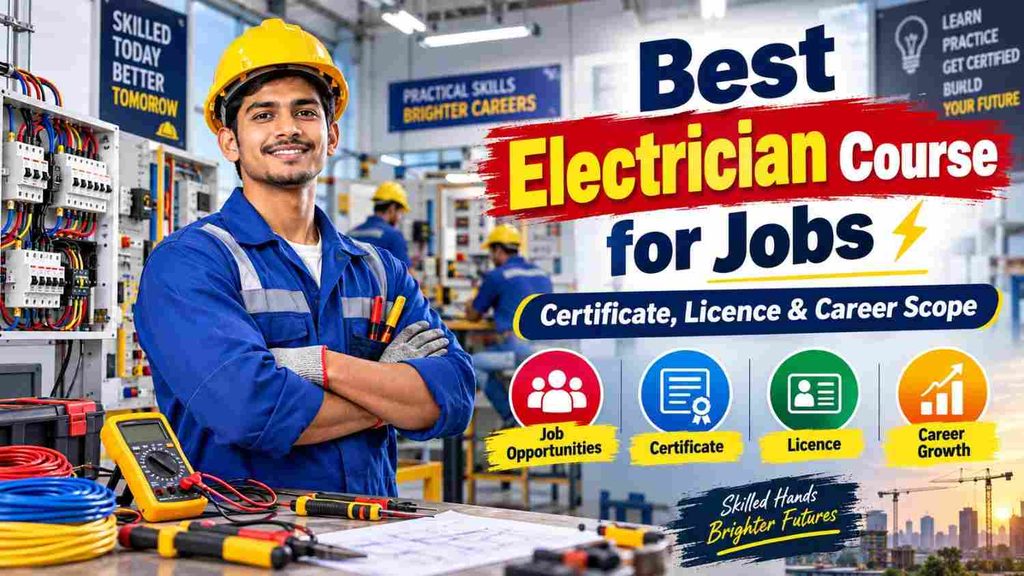
Some careers in electrical work may also require additional qualifications, experience, competency certificates, permits, or licences. These requirements can differ depending on the nature of the job and the rules of the concerned authority.
Best Electrician Course for Jobs – Quick Overview
| Particular | Details |
|---|---|
| Course Type | Electrician / Electrical Training |
| Eligibility | 10th, 12th Pass Students, ITI Aspirants, and Job Seekers |
| Learning Mode | Online, Offline, or Practical Training |
| Main Skills | Wiring, Safety, Testing, Installation, Maintenance |
| Certificate | Available after completion of selected programmes |
| Practical Training | Highly Important |
| Licence | May be required for certain professional work |
| Course Duration | Depends on the programme |
| Job Scope | Residential, Commercial, Industrial, Maintenance |
| Career Growth | Electrician, Technician, Supervisor, and Related Roles |
What Is an Electrician Course?
An electrician course is a technical training programme that provides learners with knowledge about electrical systems, wiring, testing, installation, maintenance, and safety procedures.
Learners may study:
- Basic electricity
- Voltage and current
- Resistance
- Electrical power
- AC and DC systems
- Electrical circuits
- House wiring
- Switches and sockets
- Circuit breakers
- Earthing
- Electrical tools
- Multimeter use
- Fault identification
- Electrical maintenance
- Electrical safety
Courses may focus mainly on theory or include extensive hands-on training.
Practical training is particularly important for job-oriented learning because professional electrical work involves real tools, electrical systems, and safety risks.
Which Electrician Course Is Best for Jobs?
The best course depends on your qualifications, career goals, and the type of electrical career you want to pursue.
Some popular options include:
1. ITI Electrician Course
ITI Electrician is one of the commonly chosen vocational courses for students interested in electrical work.
The programme may include:
- Electrical theory
- Wiring
- Motors
- Electrical machines
- Testing
- Installation
- Maintenance
- Safety procedures
Students should check the admission criteria, duration, and recognition of the institute before applying.
2. Basic Electrician Training Course
A basic electrician course may be useful for individuals who want to learn fundamental electrical principles before moving on to advanced or practical training.
Topics may include:
- Basic circuits
- House wiring
- Switches
- Sockets
- Earthing
- Electrical safety
- Tools
- Basic fault checking
3. Electrical Wiring Course
A wiring course focuses more on practical wiring skills.
Students may learn:
- Wire identification
- Switch connections
- Socket connections
- Lighting circuits
- Distribution systems
- Basic circuit protection
- Earthing
4. Electrical Maintenance Course
Electrical maintenance training may be beneficial for those interested in maintenance-related work.
It may cover:
- Electrical inspection
- Fault detection
- Preventive maintenance
- Testing
- Basic repair
- Equipment checks
- Safety procedures
5. Industrial Electrician Training
Industrial electrical training is generally more specialised and may cover electrical systems used in industrial plants, workshops, and factories.
It may include:
- Industrial wiring
- Motors
- Control systems
- Electrical panels
- Maintenance
- Fault finding
- Safety
Advanced industrial work typically requires stronger technical and practical skills.
Eligibility for Electrician Course
Eligibility varies from course to course and institute to institute.
Common eligibility may include:
- 8th pass for selected beginner courses
- 10th pass
- 12th pass
- ITI aspirants
- Job seekers
- Electrician helpers
- Technicians
- Apprentices
Previous technical qualifications and work experience may be required for advanced programmes.
Students should always check the official eligibility criteria before applying.
Electrician Course After 10th
Students who have completed Class 10 can explore several electrician training options.
Possible options include:
- ITI Electrician
- Basic electrical training
- Wiring courses
- Vocational electrical programmes
- Skill development programmes
- Electrical maintenance training
- Apprenticeship-related opportunities
A 10th pass qualification can be a starting point for developing electrical skills.
Electrician Course After 12th
Electrician and electrical training programmes are also available for 12th pass students.
They may consider:
- ITI-related training
- Advanced electrical courses
- Maintenance courses
- Technical certification programmes
- Vocational training
- Apprenticeships
- Industrial electrical training
The right course depends on the student’s educational background and career goals.
Skills You Can Learn in an Electrician Course
A job-oriented electrician course may cover several practical and technical skills.
Electrical Wiring
Students may learn:
- Basic wire connections
- Switch wiring
- Socket wiring
- Lighting circuits
- House wiring
- Circuit connections
Electrical Safety
Safety training may include:
- Electric shock prevention
- Safe isolation
- Protective equipment
- Earthing
- Circuit protection
- Safe tool handling
Electrical Tools
Students may learn to identify and use:
- Screwdrivers
- Pliers
- Wire cutters
- Wire strippers
- Multimeters
- Voltage testers
- Measuring tools
Testing and Fault Finding
Basic training may include:
- Voltage testing
- Continuity testing
- Circuit inspection
- Connection testing
- Fault identification
Advanced testing should only be performed after adequate practical training.
Electrician Course Certificate
A certificate may be issued after successful completion of an electrician training programme.
Students may be required to complete:
- Training modules
- Practical sessions
- Assessments
- Skill tests
- Final examinations
The value of a certificate depends on the training provider, course recognition, and employer requirements.
A course completion certificate is not necessarily the same as an electrician licence.
Electrician Certificate vs Electrician Licence
| Electrician Certificate | Electrician Licence |
|---|---|
| Shows completion of training | May authorise specified electrical work |
| Issued by training provider | Usually issued by an authorised authority |
| Useful for skill profile | May be required for professional work |
| Course-based | Regulatory requirements may apply |
| Experience may not be required | Experience may be required |
Additional permits or licences may be required for certain professional electrical positions depending on the job and work location.
How to Get an Electrician Licence
The licensing procedure differs from one authority to another.
A general process may include:
Step 1: Check the Licence Category
You may need to determine whether you require:
- Wireman Permit
- Supervisor Certificate
- Contractor Licence
- Competency Certificate
- Other electrical permit
Step 2: Check Eligibility
Review the required:
- Qualification
- Training
- Experience
- Competency requirements
Step 3: Prepare Documents
Common documents may include:
- Identity proof
- Address proof
- Educational certificates
- Technical training certificate
- Experience proof
- Photographs
- Application form
Step 4: Submit Application
Depending on the authority, applications may be submitted online or offline.
Step 5: Pay Applicable Fees
Application, examination, licence, or processing fees may apply.
Step 6: Complete Examination or Verification
An examination or competency assessment may be required for some categories.
Step 7: Receive Licence or Permit
Eligible applicants may receive the relevant licence after completing the required procedure.
Online vs Offline Electrician Course
| Online Electrician Course | Offline Electrician Course |
|---|---|
| Learn from home | Attend a training institute |
| Flexible schedule | Fixed schedule |
| More theory-based | More hands-on training |
| May be inexpensive | May be more expensive |
| Video demonstrations | Real tools and equipment |
| Good for basic learning | Better for practical job skills |
A combination of theory and supervised practical experience may be more beneficial for employment-oriented training.
Job Opportunities After Electrician Course
After completing suitable training and gaining experience, candidates may explore different electrical careers.
Possible roles include:
- Electrician Helper
- Domestic Electrician
- Wiring Technician
- Electrical Technician
- Maintenance Technician
- Building Electrician
- Industrial Electrical Assistant
- Electrical Service Technician
- Solar Installation Assistant
- Facility Maintenance Technician
The job role depends on qualification, skills, experience, and employer requirements.
Where Can Electricians Work?
Career opportunities for electricians and electrical technicians may be available in:
- Residential buildings
- Commercial buildings
- Construction companies
- Factories
- Manufacturing units
- Maintenance companies
- Electrical repair services
- Facility management companies
- Solar installation companies
- Industrial units
- Workshops
Experienced electricians may also work independently, depending on local licensing and regulatory requirements.
Career Scope After Electrician Training
Electrical skills can open opportunities in different career paths.
A possible career progression may be:
Electrician Helper → Electrician → Electrical Technician → Maintenance Technician → Supervisor
Career growth depends on:
- Skills
- Practical experience
- Qualifications
- Certification
- Licence requirements
- Employer needs
Candidates who want to improve their career opportunities can gain more experience and advanced technical training.
Is Electrician Course Useful for Solar Jobs?
Electrical skills can also be useful in the solar sector.
Candidates may explore work related to:
- Solar wiring
- Panel installation assistance
- Electrical connections
- Maintenance
- Testing
Additional training in solar systems and safety may be required for solar-related jobs.
How to Choose the Best Electrician Course
Before choosing a course, check:
- Course syllabus
- Practical training availability
- Training institute reputation
- Course duration
- Certificate conditions
- Course fees
- Instructor details
- Assessment process
- Job-oriented training
- Recognition of the programme
Avoid selecting a course only for a certificate or job promise.
Focus on practical training, safety knowledge, and technical skills.
Frequently Asked Questions
Which electrician course is best for jobs?
The best course depends on your qualifications and career goals. Common options include ITI Electrician, Wiring Training, Electrical Maintenance, and Industrial Electrical Courses.
Can a 10th pass student join an electrician course?
Yes. There are many electrician and vocational training courses available for eligible 10th pass students.
Can a 12th pass student become an electrician?
Yes. Electrician and electrical training courses are available to 12th pass students depending on the eligibility requirements.
What are the benefits of ITI Electrician?
ITI Electrician training may provide technical and practical electrical skills that can be useful for entry-level electrical jobs.
Is an electrician certificate enough for employment?
A certificate may support your profile, but employers may also consider work experience, practical skills, qualifications, and licence requirements.
Does an electrician job require a licence?
Depending on local rules and the type of work, a licence or permit may be required for certain professional electrical work.
Can I get electrician training online?
Yes. Basic theory can be learned online. However, practical electrical work requires supervised hands-on training.
What jobs are available after electrician training?
Possible roles include Electrician Helper, Domestic Electrician, Wiring Technician, Electrical Technician, Maintenance Technician, and Industrial Electrical Assistant.
Is electrician training useful for solar installation?
Yes. Electrical skills can be useful for solar installation and maintenance, but additional solar-specific training may be required.
Will an electrician course guarantee a job?
Completing a course does not guarantee employment. Skills, experience, qualifications, employer requirements, and available opportunities are also important factors.
Conclusion
The Best Electrician Course for Jobs can help students and job seekers develop useful skills in electrical wiring, installation, maintenance, testing, fault identification, and safety.
Depending on your skills and career goals, different career pathways are available through courses such as ITI Electrician, electrical wiring training, maintenance programmes, and industrial electrical training.
Completion of training can be demonstrated through a certificate, while some electrical careers may also require practical experience, competency certificates, permits, or licences.
A combination of theoretical learning, supervised practical training, proper safety knowledge, recognised certification, and relevant work experience can help students prepare for opportunities in residential, commercial, industrial, maintenance, construction, repair, and solar-related electrical work.